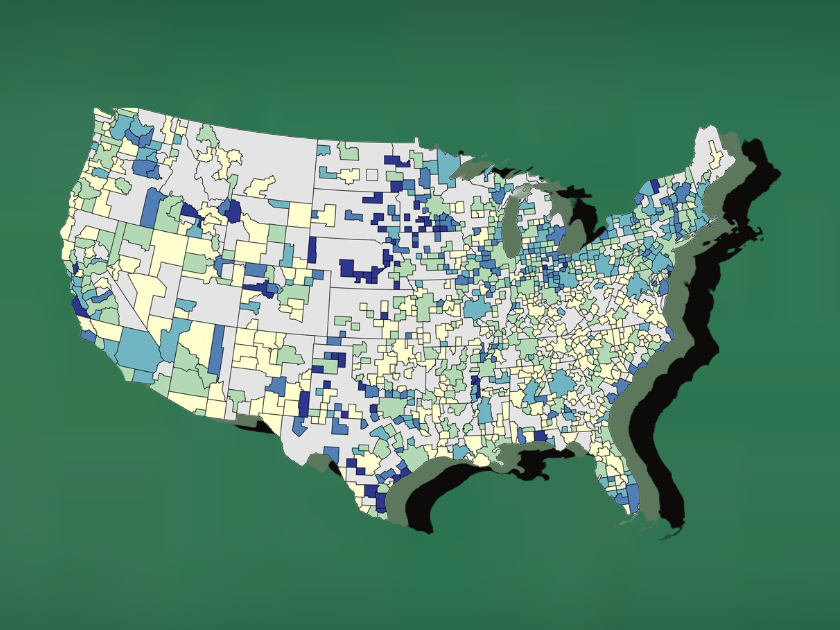
A recently published paper by Robert Manduca (University of Michigan), Brian Highsmith (UCLA), and Jacob Waggoner (Harvard), examines how jurisdictional fragmentation and economic segregation interact to create tax base fragmentation: the unequal allocation of taxable property wealth across jurisdictional boundaries. Drawing on nearly 138 million geocoded property tax records covering more than 95% of the American population, they develop a measure to quantify the amount of fiscal equalization that would be needed to equalize the fiscal capacity across all jurisdictions belonging to a single metropolitan area. Using this measure, they identify more than 500 "municipal tax havens", jurisdictions with a per capita tax base several times larger than their metro-area average. In addition to well known cases like Malibu, California or the Park Cities (suburbs of Dallas), these "havens" also include corporate enclaves with virtually no residents but millions (or even billions) of dollars' worth of commercial property. By effectively serving as tax shelters, these jurisdictions allow their residents/corporations to access to the broader metropolitan economy without contributing to programs that benefit neighboring jurisdictions.