Despite broad popular support for robust minimum wage policy, the federal minimum wage is now worth less—in real, inflation-adjusted terms—than at any time since 1949. While some state and local governments have stepped in to fill this void, others have declined to set any minimum wage standard at all.
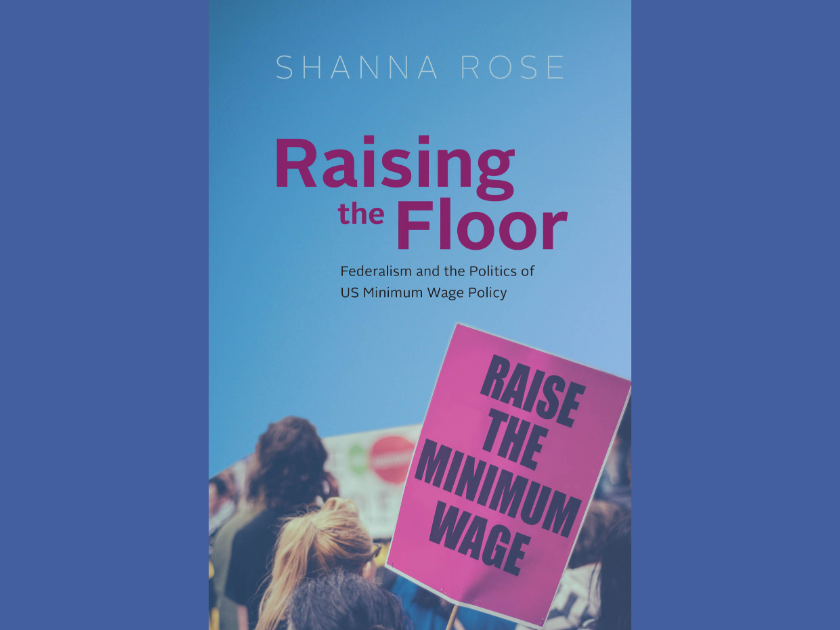
In her new book “Raising the Floor: Federalism and the Politics of US Minimum Wage Policy”, Shanna Rose examines more than 100 years of history and shows how interest groups have navigated the highly decentralized American political system to shape the development of federal, state, and local minimum wage laws.
Highlighting the importance of American federalism, Rose argues that because federalism creates multiple arenas for policy change, interest groups have sought out the sites most conducive to their goals, shifting their lobbying efforts as new obstacles and opportunities emerge. Federalism has facilitated minimum wage policymaking by fostering policy experimentation, learning, and diffusion across states and by allowing state and local governments to overcome gridlock and status-quo biases at the national level. Yet, federalism has also been an instrument for containment, enabling those opposed to minimum wage increases to litigate and preempt local-level laws.
Want to learn more? Get your hands on a copy of “Raising the Floor," out now from Chicago University Press.